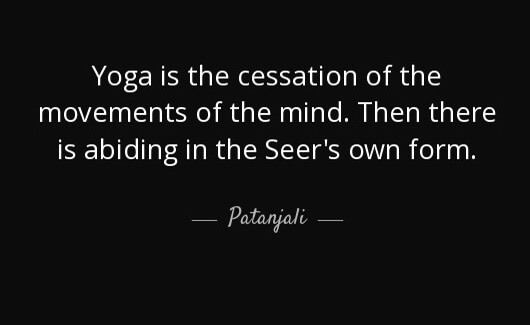


Yoga According to Patanjali
Beyond the physical practice
Today, yoga is often associated primarily with asana—the physical practice of postures found in styles such as Hatha, Vinyasa and Ashtanga.
While asana can develop strength, mobility, balance and body awareness, the physical practice represents only one aspect of the much wider tradition of yoga.
The Yoga Sutras of Patanjali, one of the foundational texts of classical yoga philosophy, presents yoga as a path of self-awareness, inner discipline and ultimately liberation.
Within the Yoga Sutras, Patanjali describes an eightfold path known as Ashtanga Yoga, or the Eight Limbs of Yoga.
Rather than being eight separate practices to complete one after another, these principles can be understood as interconnected aspects of a yogic way of living—guiding how we relate to others, how we relate to ourselves, how we work with the body and breath, and how we gradually cultivate greater concentration, awareness and inner stillness.
The Eight Limbs of Yoga
1. Yama — Ethical principles
Five principles that guide our relationship with others and the world around us
2. Niyama — Personal observances
Five principles that guide our relationship with ourselves
3. Asana — Posture
The physical dimension of yoga. In Patanjali’s teachings, asana is described through the quality of a posture that is steady and easeful, creating the conditions for deeper practices of awareness and meditation.
4. Pranayama — Conscious regulation of the breath
Practices involving the breath and prana, traditionally understood as vital life energy, used to cultivate awareness, steadiness and preparation for meditation.
5. Pratyahara — Withdrawal of the senses
Turning our attention away from constant external stimulation and beginning to direct awareness inward.
6. Dharana — Concentration
Cultivating the ability to hold the attention steadily on a single point, object or focus.
7. Dhyana — Meditation
A sustained state of meditative awareness in which concentration becomes increasingly continuous and effortless.
8. Samadhi — Integration
A state of profound absorption in which the usual separation between the observer and the object of awareness begins to dissolve. Within the yogic tradition, Samadhi represents the culmination of the meditative path.
Yoga as a way of living
The Eight Limbs remind us that yoga does not begin when we step onto the mat, nor does it end when our physical practice is finished.
How we treat others, how we speak, what we consume, how we respond to difficulty, how consciously we breathe and how present we are in our everyday lives are all part of the practice.
For me, this is where yoga becomes much more than something we do.
It becomes a way of living.